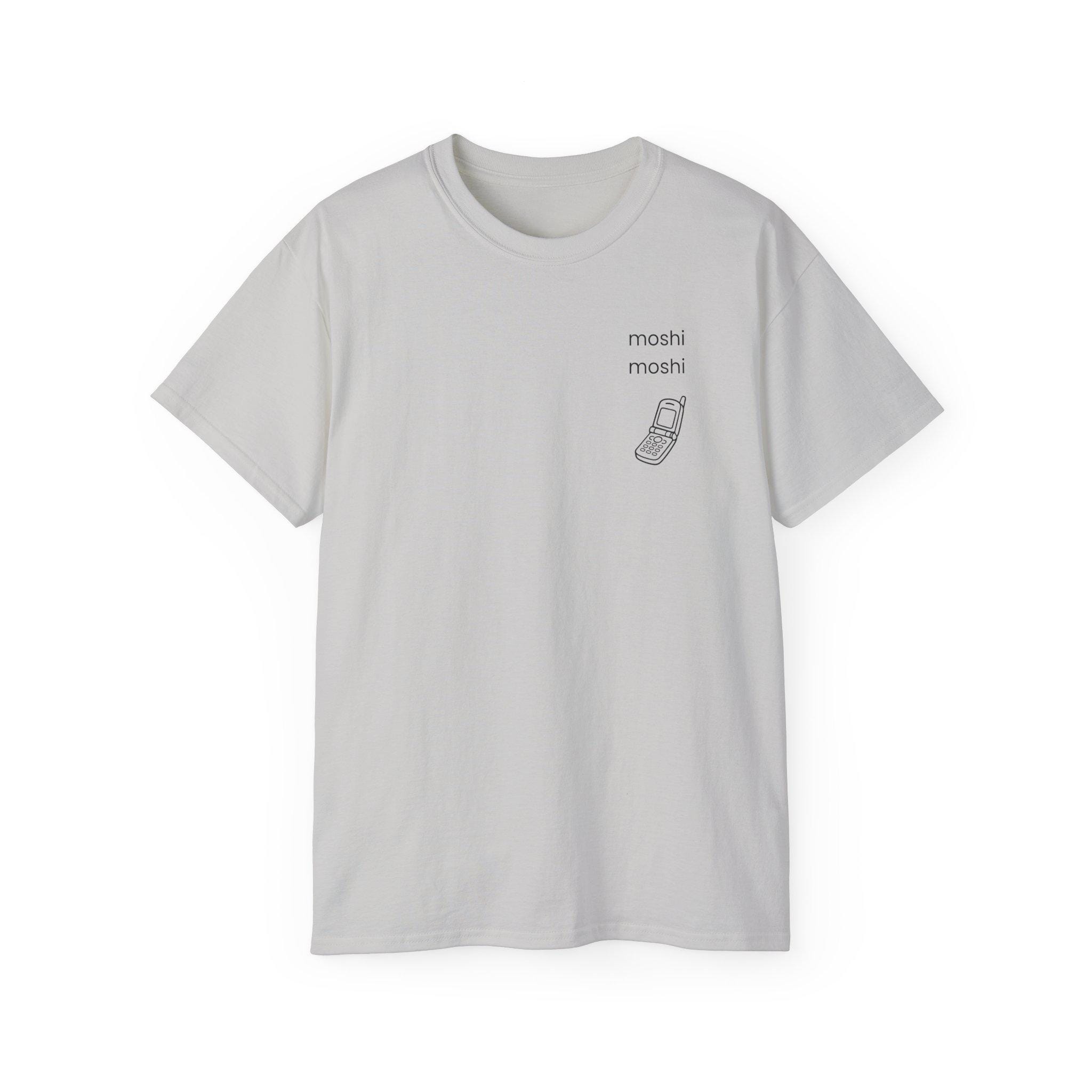
Pick up a phone in Japan and the call starts with a doubling. Moshi moshi. Not once, twice, said quickly and lightly, as if the words were clearing their throat. Say it to someone's face and you will get a laugh, because moshi moshi belongs to the telephone the way konnichiwa belongs to the street. It is a greeting with a specific job, one it has done since the age of operators and crackle.
It began as a very polite way of saying I am speaking
The usual explanation starts with mousu, an old humble verb meaning to say or to speak, the sort of word a servant might use to a superior. Saying it twice, moushi moushi, amounted to something like: I am speaking, I am speaking. It was less a hello than an announcement that words were about to happen, made by someone being careful about it.
That fits the moment when the phrase took off. Telephones reached Japan in the Meiji era, and a public service between Tokyo and Yokohama began in 1890. Early calls were not dialled from your pocket. Operators patched you through by hand, and the first operators were women who addressed callers with great formality. On a bad line, a humble phrase that said a real person is here and talking was exactly what the technology required.
The second moshi is a test, and folklore says foxes fail it
Ask why it is said twice and you will get a second story, better than the first and impossible to prove. In Japanese folklore, kitsune, the fox spirits famous for disguising themselves as people, are said to struggle with the repetition. A fox can manage one moshi, the story goes, but trips on the second. So doubling the word became a quick check: if the voice at the other end can say moshi moshi cleanly, you are probably talking to a person.
Ghosts get a similar treatment in some versions. Whether anyone truly screened calls for foxes is doubtful, and linguists point you back to mousu every time. But the story tells you something real about early telephones. A disembodied voice down a wire was a strange, uncanny thing, and a ritual phrase, said twice, made it feel ordinary.
On the phone, Japan introduces itself first
Moshi moshi does not travel alone. Japanese phone manners run in a different direction from the habits many visitors bring with them. The caller usually speaks first and names themselves, their company or their family, before asking for anyone. The person answering at home may give the family name. In an office, the company name comes out as a matter of course. You establish who is talking before you establish what you want.
The phrase also does rescue work. When a connection fades or someone has drifted off, moshi moshi comes back as a gentle knock on the line. English speakers do the same job with hello, hello, in a rising tone of concern. Waving a hand at a daydreaming friend and saying moshi moshi is the in-person version, understood as affectionate teasing: are you still receiving?
What it is not, which is where visitors go wrong
Moshi moshi is not a general greeting. Use it face to face as your opening move and it sounds like you have mistaken a person for a switchboard. Konnichiwa is for the afternoon, ohayo for the morning, konbanwa for the evening. Moshi moshi waits by the phone.
It is also, politely, a little casual. Friends and family live on it, and it is perfectly fine for calling a shop to ask about opening hours. For a formal business call, a more careful opening takes over, and younger callers sometimes shorten the whole thing to a single quick moshi with people they know well. The rule underneath is the usual Japanese one: the closer the relationship, the shorter the language gets permission to be.
Wear the greeting
Our Moshi Moshi Retro Rotary Phone Long Sleeve Tee puts the phrase where it belongs, next to the heavy dial phone it grew up with, all coils and crackle and saying things twice to be sure. It is a small tribute to the era when answering a call was an event and a voice needed proof of life. Wear it and someone who knows Japan will smile in recognition. Someone who does not will ask, which gives you the fox story, and that story never disappoints.
Wear the story
The Moshi Moshi Retro Rotary Phone Long Sleeve Tee, this article, on cotton.
Get it on Etsy