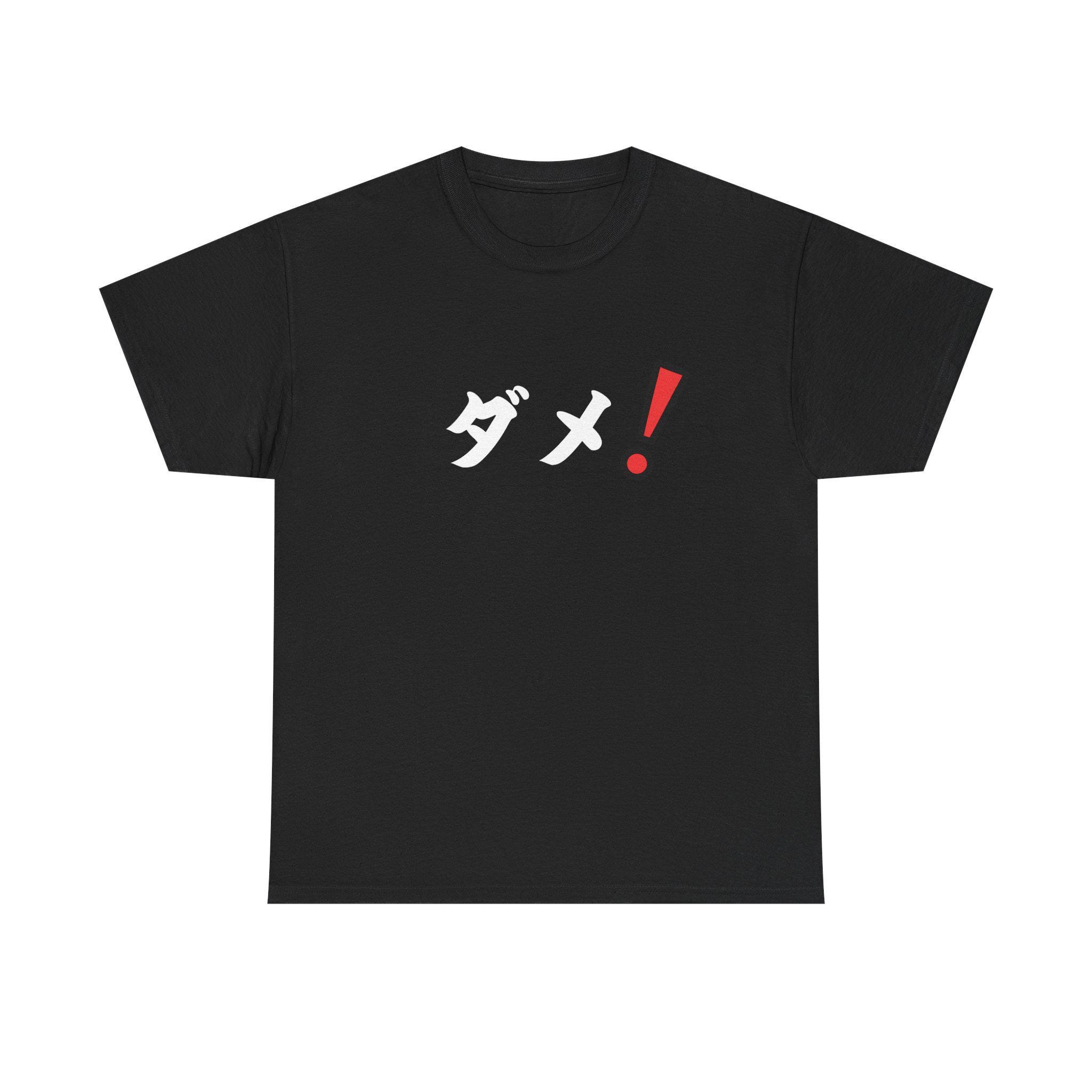
Every language has a word that does unreasonable amounts of heavy lifting. In Japanese, that word is dame, pronounced "dah-meh," written ダメ in katakana. Ask what it means and a Japanese friend will pause, because the honest answer is: it depends who is saying it, how loudly, and whether you are about to touch something expensive. Roughly, it covers no good, forbidden, useless, hopeless, don't, and stop that at once. Two syllables. Infinite jurisdiction.
The Swiss army knife of refusal
Start with the basics. Something broken is dame: this vending machine is dame. A plan with no chance is dame: asking for a raise in April is dame. It can mean must not, as in the signs you will see all over Japan, often with a cheerful pictogram doing the softening. It can mean cannot, as in your Japanese is not dame, it is just not there yet. And it can be a full sentence all by itself. A parent catching a toddler reaching for a hot stove does not deliver a lecture on thermodynamics. They say: "Dame!" The toddler understands perfectly.
How it sounds versus how it lands
Here is the funny part for English speakers. Dame looks and sounds like it should be elegant, almost French. Say it out loud: dah-meh. It has a certain continental glide. In practice it lands like a small, firm hand on your chest. It is blunt without being rude, which is a very Japanese trick. There is no please wrapped around it, no sorry attached, and yet it rarely offends, because everyone grew up hearing it fifty times a day. It is the linguistic equivalent of a traffic cone: not angry, just definitively in your way.
The grammar of forbidden
Dame also moonlights as grammar. Stick it after a verb in its te-form and you get a prohibition: tabete wa dame, do not eat that. It shows up in set phrases everywhere, from classrooms to construction sites. Learners of Japanese tend to meet it early and use it constantly, because it is one of the few words that lets a beginner sound decisive. Mispronounce your particles all you like; say dame with conviction and people will assume you know what you are doing.
Why it is funnier than "no"
English has no, not, never, forbidden, prohibited, do not, and each one carries its own baggage. Dame compresses the whole spectrum into something you can shout, mutter, print on a sign, or stamp on a form. There is something deeply satisfying about a culture that took the entire concept of refusal and shrunk it to two syllables. It is minimalism applied to telling people off, and minimalism, as the Japanese keep demonstrating, is a superpower.
Dame in the wild: a field guide
Once you start listening for it, you will hear dame everywhere in Japan, and each setting gives it a different flavour. On television, a variety show host shrieks it at a contestant who has just failed spectacularly, and the audience howls, because dame as comedy is practically a genre. In a shop, a clerk saying it about a return policy wraps it in so much polite cushioning that you barely notice you have been refused. Among friends, it becomes affectionate: your idea is dame, your cooking is dame, you are dame, all said with love. Context does all the work, which is why the word never needed to evolve into six different words. It just borrows the room's mood and runs with it.
Visitors pick it up fast, usually by accident. You will hear it at the station when the last train is gone, at the restaurant when the kitchen has closed, at the temple when you step somewhere you should not. Each time, the meaning is instantly clear even if your Japanese is otherwise limited to konnichiwa and sumimasen. There is a small thrill in understanding a foreign word purely from the firmness of its delivery. Dame is many travellers' first real Japanese sentence, and honestly, it is a good one to have.
Wear the word
We put DAME in big, bold katakana on a tee because it is the perfect Maison Tee word: it looks fantastic, it sounds like a compliment, and it means absolutely not. Wear it to family dinners, wear it to meetings, wear it anywhere someone might ask something unreasonable of you. Let the shirt do the refusing. It is the most polite way we know to say no in two syllables.